Characters writing themselves


copAfter my critique group gave me a not-too-subtle push to get on the stick and write, I did. My first chapter is finished (first draft, anyway), and I started the second. It feels good.

One of the most enjoyable things about writing fiction is that the characters often take the author in surprising directions. I have sketched out each chapter and written short back stories on every character to give me a sense of their personalities. However, I was as surprised as Janelle that while getting a bite to eat at 392 Caffe, she would run into the local police officer who had worked the case that the Chicago Tribune reporter was in town to write about. I hadn’t planned for them to meet like this and wasn’t even sure that they’d meet at all. But the restaurant is just a few blocks from the Clinton police station, so when I was describing the lunch patrons, it made sense for one of them to be a cop. It was only when Janelle was talking with the waitress that she and I discovered he was that particular officer. I kept writing to find out what she’d do. Janelle’s decision to go over and introduce herself told the reader more about her and gave us both a clue as to what Sergeant Fredrick Jensen is like.

Chapter two is Janelle’s interview with the officer from his perspective. He’ll approach the encounter the same way he performed his investigation – cautiously and methodically. Because of the point of view, we’ll gain some insights that Janelle can only surmise and some that she will have no way of knowing. I’m as interested as she is to see where Fred takes us.

That interview, like the others in the book, underscores one of the story’s themes: how well one person truly knows another. Each of us displays various personality traits to different people. One friend might bring out the intellectual side, while another might elicit the fun-loving part. We aren’t being disingenuous; we don’t think about it. Like the blind men and the elephant, each would describe us slightly differently, depending on how they experience us. As Nietzsche is often paraphrased, truth is a matter of perspective.
Posted in My posts | Tagged , , , , , , , , , | Leave a comment

Back to work


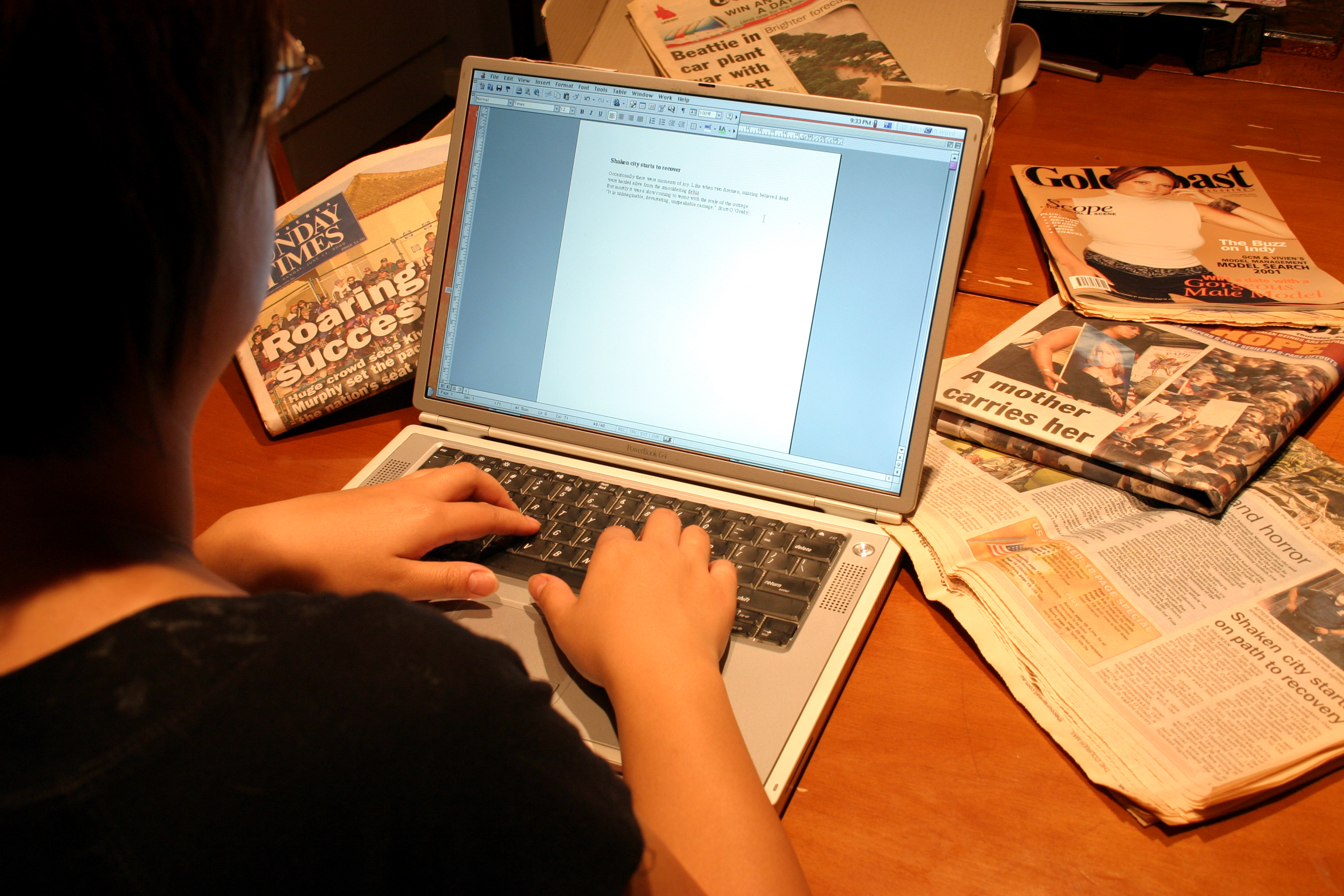
woman typingI got some tough love from my critique group last week. After making suggestions on how to improve my submission, they gave me their strongest comments: No more work on the house, no more trips, no more slacking off. Get back to work – write!

I admit it. I’ve been a slacker. Not that I haven’t been productive in other areas. But over the summer, I’ve gotten into vacation mode. I’ve filled my free time with DIY projects, getting together with family and friends, and just enjoying some down time. I even skipped blogging the last two weeks.

I’ve enjoyed the change in my routine and less frenetic pace, but I didn’t need my critique group to tell me that my “vacation” had extended past its expiration date. The longer I went without writing, the heavier my conscience. I’d assuage it periodically by making revisions to my previous submission and adding a bit of new material. However, in two months, I’d only moved the story forward by a paltry 800 words, about a day’s worth of work.

The more time that elapsed between writing sessions, the more excuses I found not to write (e.g., I simply must delete old messages from my phone). But a funny thing happened when I did sit in front of the screen and pulled up my story. Not only did my guilt ease, but I actually felt good. I found myself thinking about my characters, what they’d do, how they’d respond, little quirks of personality and how they’d play out. I thought of new wrinkles in the plot, how to create mini arcs to keep readers turning the pages. Still, as much as I love to write, writing is work.

And that’s the crux of it. Writing is work. It’s a job. And like any job, you have to show up for work, get it done and do it well. I’m fortunate that as much as I liked my “vacation,” I also like my job. And I’m back to work.

Posted in My posts | Tagged , , , , , | Leave a comment

No sunglasses required


imageThoughts walking the beach on a cloudy, cool day

We are the seekers.

The stone skippers looking for one more hop to shatter the lake’s glass. The hunters after increasingly elusive Petoskey stones. The pilgrims yearning for respite, refreshment.

We are a solitary lot under the ponderous clouds as we watch sea birds playing hide and seek in the fog. A handful of children scattered along the shore of the state park shiver in the still-chill Michigan lake, while their parents fumble to close the top buttons of their slickers. A barefoot pair in jeans and sweatshirts trail a seagull with an injured wing, looking like a Lewis Carroll version of a suburban couple out walking their dog.

I am a story seeker. Unbidden, words tumble into my mind, careening off each other. I clutch at them, stuffing them into my memory, a trove to sort later. But they are will-o-wisps. I form sentences, phrases, images. Searing them on my brain before they escape.

But like a summer’s tan, the words are fading. A few I’ve safely embedded behind the blinking curser of my screen. The precious ones are gone;  only trinkets remain.

I must stuff my hands in my pocket, turn my face to the wind and seek to replenish my treasure.

Posted in My posts, Random writings | Tagged , , , , , | Leave a comment

Paradise (with the occasional snake)


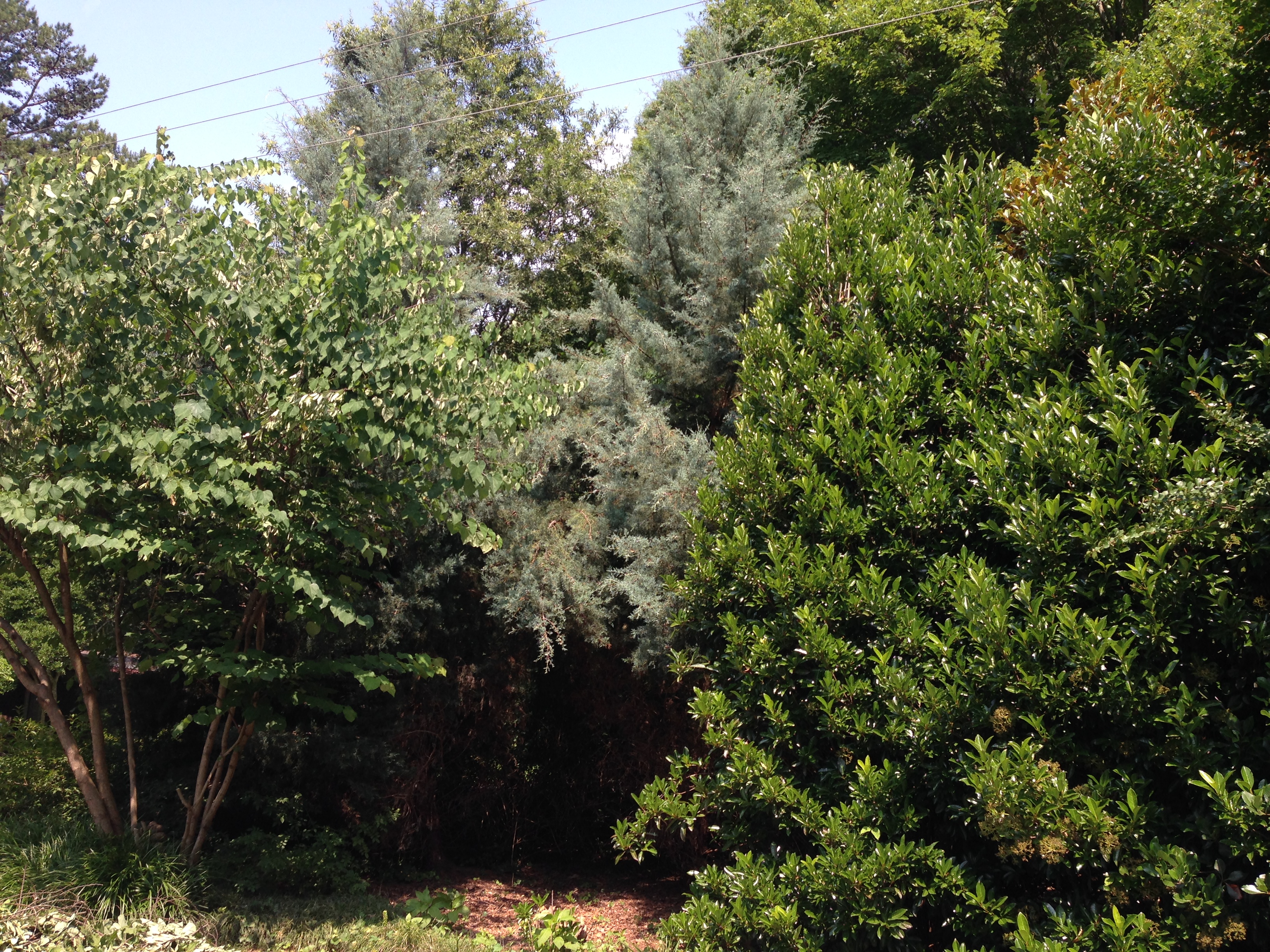
trees-different genusesA slash of red is the only reminder that a family once lived on this strip of green. The house and the children that played tag in its backyard are long gone. The property has more value – at least to developers – than the home that once occupied it.

But its owner is will not be tempted. She’s not wealthy, but she will not sell to a developer eager to throw up another McMansion – or two. She wants to hire a builder to erect a home that blends into this old neighborhood. A house that a growing family can afford, whose children will ride scooters under the arching trees that protect them from pop-up summer showers and sweltering sun.

It’s easy to succumb to the green. Maples, hollies, pin oaks, cypress, different genuses living side-by-side in harmony. Much like the people in the neighborhood – black and white; Asia-, Europe-, Middle East- and U.S.-born (in both North and South); gay and straight; teachers, lawyers, writers, trades people and an NFL player. Even Democrats and Republicans peacefully co-exist. From modern to ‘50s ranch, modest and grand houses reflect their occupants’ personalities. A Home Owners Association would be anathema. Although social circles are outside the neighborhood, people down the street and around the block coalesce in times of need.

But invasive species flashing fistfuls of a different green sometimes slither in, upsetting the ecosystem. Some of the new inhabitants understand the balance of nature. Others don’t. With no sense of place, they relish the ‘hood’s beauty without comprehending that neighbors tolerate each others’ differences, peculiarities and sometimes irritating traits. True neighbors settle disagreements over the back fence or a glass of wine, talking about the weather and children, and only then gently circling round to the purpose of the visit. Discussions are respectful. Neighbors bring loaves of bread, not lawsuits.

The woman who owns the vacant lot cannot ensure a snake won’t insinuate its way into paradise and spread its poison. But she’s eschewing the fistfuls of green going her best to maintain the balance of the neighborhood ecosystem.

Posted in My posts, Random writings | Tagged , , | Leave a comment

Patience


WordRecoveryMessageAs if writing weren’t difficult enough. Each time I copy or cut my prose, Word balks. Actually, it more than balks. It shuts down.

If you’re a parent of a teen, you are probably familiar with this routine. A sulky/defiant/recalcitrant/stubborn teen is facing you with an I’m-only-putting-up-with-your-lecture-because-I-don’t-want-to-get-grounded (or grounded longer) look. You, the responsible parent, emotionally pontificate about why your formerly perfect child’s recent behavior will: a) result in rejection from the college of his or her choice; b) cause deep regret later in life; c) deeply disappoint loving grandparents; c) lead to ruination; d) all of the above. Sometimes, a parent just pulls out all the stops, hoping either pleas or threats get through the firewall of adolescence. Generally, they don’t. At least, not immediately.

Begging and threatening don’t work well with Word either. The program is deaf to entreaties that I am on deadline or that it has just zapped the best part of the last 500 words over which I agonized for hours. It also doesn’t respond to cursing. In fact, slightly offended, it just shuts down longer.

Like living with a teen, I’ve become accustomed to Word’s moody, predictably unpredictable backtalk. I brace myself for its multiple stopped-working and trying-to-recover outbursts. I save work more frequently to prepare for its ultimate shutdowns. Over time, young Word’s performance seems to recover. The longer I work with it, the less frequently it crashes.

At some point, a new version of Word might improve its behavior. Or I might swap out my aging computer. But for now, I’m working across the generational divide, and we’re learning to live with each other.

Posted in My posts | Tagged , , , , | Leave a comment

Worth of a word


WordsWhat is a word worth?

As any teacher can tell you, the inflated essays of students stretching towards their word count are very, very, very (497, 498, 499) ineffective (500!). The Gettysburg Address came in at about 272 (depending on the version), yet is far more memorable than the ocean of words Edward Everett delivered before the president ascended the platform. If they had been paid by the word, Everett would have left a wealthy man, while Lincoln would have had to borrow train fare back to D.C. Yet, the Civil War president’s inspirational words left America the richer.

Too many people hiring writers today continue to pay by the word, either literally or figuratively. They seem to think we get an assignment, sit at our computers and spontaneously write literary gems. They don’t factor prep work (research and/or interviews) and revisions as part of the creative process.

This week, I was reminded of the value in which people hold our craft. I quoted on a job and was met with thinly concealed disbelief. The client repeated the quote as a question. It was, after all, only a five-minute business video. They wanted to pay me for what they saw – four one-hour video interviews (using two cameras), not what they didn’t see – coordinating the interviews; writing the questions; reviewing four hours of video and another three of b-roll to identify concise messages, voice intonations, body language and images that would pop; scripting; and working with the videographer on b-roll and multiple edits. That five-minute video took about 50 hours of my time and another 100 or more of the videographer’s.

Ultimately, the client opted for students to produce the video. The work would give them experience – and they were free. They likely would put in about the same number of hours as the professionals would. They’d take longer, since they were doing the project in their spare time, but they would (probably) deliver a finished product. The result would be rough, but it would suffice.

However, the client would be able to distinguish the difference. For the last year, he’d been using a video we’d produced. He’d make the comparison and justify the choice in dollars, but not sense. Cutting corners leaves some results on the table.

Clients still want to pay by the word, but not all words are equally created. We remember just one Gettysburg Address.

Posted in My posts | Tagged , , , , | Leave a comment

On fire


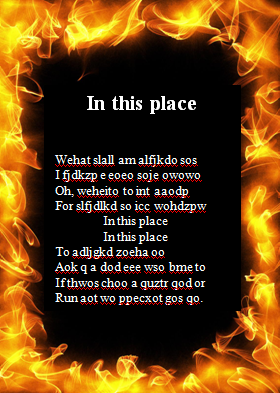
InThisPlace-flamesI faced the room of orange jumpsuits. We began where we had left off a week earlier, by composing a landay, the two-line poem of nine and 13 syllables favored by Afghan Pashtuns. Actually, three class members began where we had left off. The other 10 ladies scattered around the common area were new to the class. That’s one of the challenges of teaching creative writing to inmates. The students are a transitory lot.

My request was met with furtive and not-so-furtive whispers. I doubted they were favorable. It’s harder than it sounds, I warned, adding that spontaneously making up landays about everyday life is hugely popular in Afghanistan. This elicited eye rolls and louder whispers. However, working alone, in teams or as entire tables, the women were bent over papers, their fingers ticking off the syllables.

One lady looked up. “It makes you get rid of the unnecessary words,” she said.

Hmmm.

“That’s the point isn’t it?” comprehension dawning. “In poetry, each word has to count.”

I called time and asked who wanted to share. A hand shot up. The woman read; the others broke into impromptu applause. She beamed. One lady, who had remained determinedly aloof in the previous three classes, asked to share. Each reader drew murmurs of approval and applause. The sea of skepticism had become a tsunami of fervor.

We read and discussed poems by published writers, each using different poetic devices and written in various forms. Now, write 12 lines, I told the women. Use one or more of the devices we’ve observed and discussed. Immediately a hand shot up. The first landay reader. She had been struck by the repetition on one of the poems we had read, and she had adapted her landay to a longer form, using repetition for emphasis. It was not 12 lines, she apologized, but she’ll write a 12-line poem next. She just wanted to write this one.

Keep writing, I urged, as the class ended. Several of the drop-ins asked if they could come back this week.

These ladies were on fire.

Posted in My posts | Tagged , , , , | Leave a comment

Call in the professionals


woman typingI’ve been watching way too much HGTV. The pros come in and, despite unexpected construction challenges and indecisive homeowners, they completely renovate houses in a matter of months. They make perfection look easy.

Inspired, I decided to tackle my bedroom and bath. I’ve pulled down wallpaper, washed and prepped walls, and painted. I’m still working on it.

The output of professional writers often is viewed the same way I view professional painters: How hard can it be? What people don’t see are the years of training and practice that go into perfecting the crafts.

Words don’t just flow from our fingers through the keyboard and onto our screens. Writing is revision. My first sentence or paragraph rarely is the one with which I started. To make the end products read fluidly, to paint vibrant images, to elicit strong emotions, professional writers paint and repaint our computers’ canvases. The more we do it, the better we get, but writing takes a lot of work and concentration and mistakes. Yet, we make it look easy.

My weekly posts, for example, generally take me an hour or so to write. But first I do the prep work. I think about the topic, how I want to approach it and ponder my lede, which I rarely end up using. Once I know the structure, I sit down to write and rewrite. The post often takes an altogether different form than I originally had planned. All that for about 250 words.

Like professional painters – or those in any profession – writers see every flaw in our work when a job is finished. I have yet to pick up a magazine in which one of my articles appears and not want to change a word or reorder a paragraph.

It’s fun – and good for us – to dabble outside our fields, to stretch our capabilities and express ourselves. But there’s a reason why experts are paid what they are. For perfection – or as close as we can get to it, call in the professionals.

Posted in My posts | Tagged , , , , , | Leave a comment

Escape in writing


compositionbook“Some of you are here because you want to become better writers,” I said, as eight pairs of eyes evaluated me. “Some are here because you just wanted something to do.”

A few heads nodded. They were giving me the benefit of the doubt.

The women in my eight-week creative writing class all knew each other. I was just beginning to learn about them, to see the individuals inside their jail-house jumpsuits. One was a helpful chatterbox. Another, a seemingly benign grandmother. A self-segregated trio seemed more like middle-schoolers than grown women, as they exchanged whispers at a table apart.

Their first in-class assignment: write 500 words about how they were named.

Gasps – 500 words! Why, that topic could be tossed off in a sentence or two.

Give it color, I urged. What is your namesake like? Are you similar or different? Help me to see them. Do you like your name? Has it helped shape who you are? How? Did you ever wish you had another name?

Eight heads bent over their composition books, stubby number 2 pencils scratching. They wrote, read, erased, thought and wrote some more. Time up.

One by one, they volunteered to stand at the front of the class and share personal thoughts. Their stories were as different as they were. One woman said her name meant “bittersweet,” but it didn’t fit, and she recalled her sweet grandmother and namesake. Another reflected that her name had made her tough, quick to fight, while a third said her mother had given her “the most beautiful name she could think of.” The words of one of the whispering trio brought her hometown into such sharp focus that her classmates murmured their approval when she sat down.

These women didn’t know each other as well as they thought they did. The words they shared pierced their exteriors and cracked a window to their hearts.

In future classes, they will discover writing techniques, learn to identify them in writing samples and begin to consciously use them in their own writing. By the end of the program, I hope each of my students will consciously shape their work to communicate their thoughts more clearly.

I don’t know what these women have done to be locked away, some for a very long time. I don’t want to know. I do know that when they stood in front of the class and read the words they had written, they glowed. Writing, I told them, is empowering. And good writing is powerful. I hope that long after I am gone, they will continue filling their composition books.

Posted in My posts | Tagged , , , , , | 4 Comments

Jettisoning the flotsam


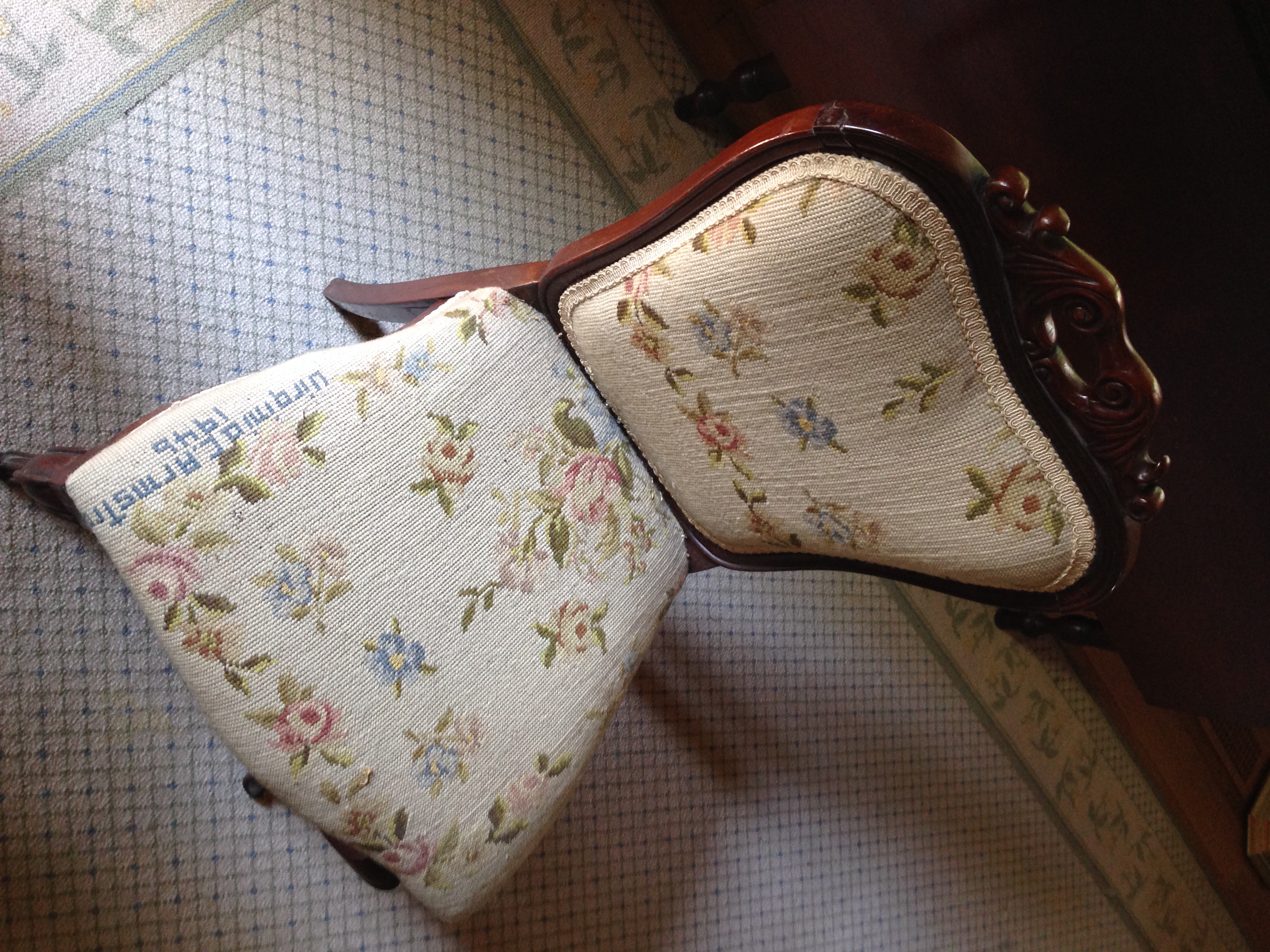
Mimi's chairOver the years, I have accumulated a lot of treasures. Some might call it junk.

Years ago, my visiting parents noted that my living area could use additional light and more places to sit. When they downsized, I inherited a box of lamps and enough chairs to start my own prayer circle.

Having a shortage of storage space doesn’t help matters. Closets are crammed. School supplies share shelves with linens, and the vacuum cleaner snuggles between winter coats. Boxed business records skulk behind a bedroom door. Suitcases stand hopefully next to the closet, and college footlockers stand in for cedar chests at the foot of beds.

Each spring, I vow to clean out the old, the worn, the unused. I turn a steely gaze and firm resolve to pitching or donating the accumulated flotsam from the wreck that is my home. There’s the two-foot high pine bench that would look more at home in a barn than against my wall. But I got it from the house sale after my neighbor died. Each time I navigate around it, I think of her. There’s the stained, chipped (and glued) cup in my bathroom that should have been tossed long ago. But it brings reminiscences of the trip my mother and I took to England. There are two uncomfortable antique chairs of which visitors steer clear. But each of my grandmothers made one of the needlepoint seats. Every Christmas, my daughter urges me to trash the wild-haired Styrofoam angel, green pine cone trees and finger-woven loop of yarn that would be better placed in the garbage than on the tree. But memories of a little boy and even younger girl proudly opening their hands with their holiday offerings still my hand.

And so it goes.

Whereas I can turn tattered towels into rags and have no trouble recycling magazines I edited long ago, I can’t let go of the stuff of memories. I will leave this “junk,” but not the associations, to my daughter who might find it easier to rid herself of it. But for now, I’ll keep the clutter.

Posted in My posts | Tagged , , , | Leave a comment