
Meet Father Francis


priest_holdingup_chalice_redOn Black Friday, you won’t find me fighting the crowds for bargains. Nope. I can’t think of anything less enjoyable. Instead, I’ll be doing something I do like – finishing the first chapter of An American Terrorist (or whatever it will be called). I guess I should qualify that. I’ll be finishing the first draft of the first chapter. I’ve let Father Francis take over, so it’s more about him than I had intended. I had wanted to let the reader get a sense of place by seeing Clifton through his eyes. I’ve done that to some extent, but mostly you get to know Father Francis. So, I might have to revise it or pull it out altogether, depending on how the book unfolds.

However, in the meantime, here’s a little about the priest:

He had been 27 years old and fresh from seminary when the bishop had first assigned Father Francis to St. Boniface. It still took him nearly a 10-count to register that someone actually was addressing him, when they added “Father” before his name.

The two suitcases that the young priest dropped in front of the two-story rectory were as new as he was. The zippers, with their shiny black patina, strained to contain all the priest’s worldly possessions within the canvas confines of the unmarred bags. As Father Francis took in the artistry of the century-old building, he found his eyes drawn to the widow’s walk atop the rectory’s hip roof. The architectural detail seemed misplaced on a cloister for men. An ornate, black wrought iron railing hedged in the walkers like an embrace, as they paced above the Mississippi River.

The fledgling priest hoisted his luggage and, grasping a bag firmly in each hand, set his eyes forward. He strode purposefully over the rectory’s threshold into a lifetime of service.

It’s still a little clunky. I’m not sure if I need to say “He was so new in his vocation that it still took him nearly a 10-count…” or if that’s understood.

This section takes place 20 years earlier during his first assignment in Clifton, and you see how Father Francis has changed since those early days of his priesthood. The way that I’m thinking now, that will prove to be significant.

Suggestions?
Posted in My posts | Tagged , , , , , , | 2 Comments

Keeping it real


writer's clockI finished reading Gone Girl, which means that I didn’t get much writing done. As I do now with all books, I found myself unable to read it purely for pleasure. Between wondering what was going to happen next, I analyzed it to see how the author colored our mind’s palette to make the settings memorable and characters realistic.

The acknowledgements at the end of books usually list experts that help the authors get the technical details right. They also usually thank families for their unconditional support. However, Gillian Flynn’s thanks to her husband went beyond the usual spousal thanks. She acknowledged his help in making her protagonist act and think as a man would.

It was a great reminder that I can’t write in a vacuum. Getting another perspective is invaluable. My critique group is a great sounding board. They help me take a good idea and make it better. They can help round out a flat character. And their suggestions force me to step back and look at every element with new eyes, the eyes of a reader.

When I finish An American Terrorist – that’s not what the title will be, but I need to call it something now – I’ll ask our parish priest to give me feedback on Father Francis. I assume that being a priest is tough, always being on call, listening to other people’s problems but only being able to confide your own to another priest who understands the life. However, I’ll welcome a real priest’s suggestions on how to make Father Francis come alive.

In the meantime, I’ll finish my first chapter and see what my critique group – and you – say.

Posted in My posts | Tagged , , , , , , , | Leave a comment

Reading to write


readerI love to read good writing and last week I hit a bonanza.

First, my name finally came up on the waiting list for Gillian Flynn’s Gone Girl. I’m desperately trying to stay awake at night to find out of the husband is just a jerk or a murderer, and I’m not having much luck – keeping my eyes open, that is. I think I’m reading. Then I realize that my eyes have gotten so heavy, they’ve closed. Very annoying. Particularly, since I’m enjoying the book. I might have to put my own writing aside this week to find out what happened to Amy (the girl of the title). Next week, I can pick my story’s thread back up. In the meantime, I’ll just leave Father Francis in his study pondering life in Clifton.

In addition to reading Gone Girl – or at least trying to – I was one of the judges for the Charlotte Writers’ Club Members Prize in the fiction category. The Members Prize, as you probably figured out, is open only to Club members, and submissions cannot have been published previously or won other prizes. I was completely blown away by the entries. It’s really going to be tough to choose a winner. The dialogue in some of the stories was so natural, it made me feel that I’d actually dropped in on a conversation. The characters in other stories were so well drawn that I felt I knew them. In my favorite, the writer expertly intertwined the main character’s state of mind with the setting.

I always feel torn – write or read. Ideally, I’ll do both. My writing is better when I read good writing, and last week – and this – I’ll do just that.

Posted in My posts | Tagged , , , , , , , | Leave a comment

Father, I hardly know you


priest_holdingup_chalice_redI thought I knew my characters. I’d created them, after all. But I am discovering that I don’t know them as well as I thought I did.

Take Father Francis. He was to have been a very minor character, a possible throwaway character. He only came about because I wanted someone who might have known Paul as a young boy. Since Paul is Catholic, he likely would have been an altar server, so the parish priest would have known him, although not well.

Since he didn’t know Paul well, I considered obliterating Father Francis, but apparently, he had other ideas. Rather than fading off the pages, he has taken over the first chapter, the one in which we were to have met Janelle. But that will come later. You see, Janelle doesn’t know much about Clifton or how it shaped the people who grew up there. Sure, she’ll ask questions, but people won’t tell her everything they know. She is, after all, an outsider.

So, I need an insider. Someone who could let the reader know what Paul’s hometown and the people in it are like. I want someone to set the stage, who could see the town holistically through unbiased eyes. Father Francis – an insider who is an outsider.

I’ve just begun, and I’m looking forward to his revealing more about himself – and Clifton.

Posted in My posts | Tagged , , , | Leave a comment

Write and rewrite


computer keysWell, I finally started writing – rewriting mostly. I just couldn’t get the first few paragraphs standing still. When they finally fell into the “acceptable” category, I moved on. 300, 400, 500 words – four hours later, a page. It’s not bad, not great either. As I add, I circle back and revise. It’s a virtuous (our vicious) circle.

Day 1: Write, rewrite, rewrite.

Day 2: Long day at work, too tired to write.

Day 3: Rewrite, write, write, rewrite.

All those rewrites are why the first half is always better than the second. Most the imperfections have been polished away. Most, but not all. Never all.

So, it begins:

Life was predictable in Clifton, Iowa. At least it was until Sen. Thomas Sauk and the veterans center employees died. Were killed, actually. The deaths had thrown off the town’s rhythm, and things have been off-kilter ever since.

That’s how it starts – for now.  I made three changes after I copied and pasted it in this post. Before I finish the book, those first three sentences will change again. Maybe slightly. Maybe I’ll throw them out and start again.

Each word must count; feedback is critical. Publishers usually ask authors to make changes in their works before they’re published. Sometimes they want complete rewrites. And the writers I’ve talked with think that their books are the better for it.

So, I will write and rewrite, get feedback and write and rewrite some more. Let’s see, if I write about 500 words a day, give or take (mostly take, given the way things are going). About 120,000 words altogether. Holidays and weekends off, or the equivalent thereof to give me wiggle room. I should be wrapping up my book about this time next year.

Then the real work begins.

Posted in My posts | Tagged , , , , , | 2 Comments

The weapon


SONY DSCI finally figured out how he did it!

I didn’t want my terrorist to use the usual weapons of choice. I wanted him (or her) to use a biological or chemical weapon. Chemical weapons can be very tricky and could hurt the person dispersing them. Biological weapons can be more narrowly targeted and, with proper precautions, are less likely to infect the perpetrator. So, biological it is.

I did some preliminary research to find a logical bacterium, fungus or virus and narrowed the list to three that seemed feasible in my story’s setting. This week, I solicited suggestions from a biology professor, and voila! Comparing his list and mine, there was a match.

Once I settled on the toxin, he provided additional information, expanding on what I already had learned. He also pointed me to more sources for continued research.

I need to know everything I possibly can about my biological weapon, so that characters can talk about it knowledgably, the perpetrator can use it accurately and that it is deadly.

Of course, I don’t want to provide a how-to manual for would-be terrorists, so I might leave out crucial steps or introduce the toxin in a way that would not be fatal in real life. However, terrorists don’t need me to do their research for them. For people who are interested, information on potential biological and chemical weapons is not hard to find.

Posted in My posts | Tagged , , , , , , | 1 Comment

The beginning: Write


writer's clockBeginnings and endings are hard.

Writing, like any relationship, begins with great anticipation, a little trepidation and a sense of discovery. There can be false starts until I grow comfortable and get in a groove. At times, things move along smoothly. At others, the going is rough. When characters prove to be intransigent, I walk away. Sometimes there’s a trial separation. But, hopefully, I learn from my mistakes and right what was wrong. I change direction, adapt and grow.

Of course, things don’t always work out, and parting is difficult. A commitment broken. Effort lost. Passion spent. So much of myself gone. It’s an empty feeling, but it is not wasted time. I’m a bit wiser, and a new work benefits from my experience. I even might come back around to an old one, seen now with new eyes.

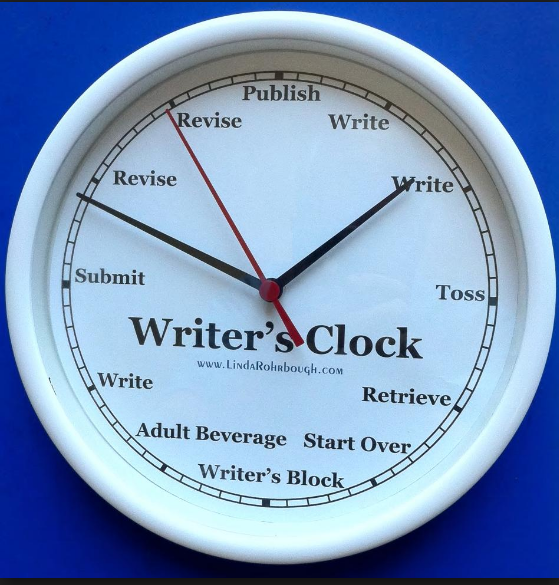
The hands of the writer’s clock on my wall mark each step of the process: write, write, toss, retrieve, start over, writer’s block, adult beverage, write, submit, revise, revise, publish.

Things of value do not come easily. But when the hurdles have been surmounted and it all comes together, the sleepless nights, the worry, the frustration are forgotten, and like all good relationships, it’s worth it in the end.

Posted in My posts | Tagged , , , , | Leave a comment

Living like I’m dying


Esther closeRecently, someone told me I was interesting, and it wasn’t a pick-up line.

Since I’ve never won a Pulitzer Prize, rocked the medical world with my discoveries or been recognized in any way for doing something out of the ordinary, let alone extraordinary, I was more than a little surprised. I challenged my acquaintance to back up her claim. As she began to tick off a list of things I’ve done, I realized that by living long enough, anyone has the potential to sound interesting.

The key word here, of course, is “potential.”

As babies, our lives are blank pages. Some of us are given sticks we must sharpen to scratch out our chapters, while others receive pens that write easily. The books of our lives might be short or long, tragedies or comedies. Each will include crises and turning points. Like a good Greek tragedy, bad things can happen for no apparent reason. How we handle each plot point determines the ending.

I’ve been feeling a little fatalistic lately, and in my head I hear Tim McGraw singing “Live Like You Were Dying.” I’m still too practical to do everything I want to do (and skydiving is NOT on the list). But I am going to do more. I don’t know how many chapters I’ll write before the last one, but when it’s finished, I don’t want my “shoulds” to outnumber my “coulds.”

Posted in My posts | Tagged , , , , , , | Leave a comment

Burying the lead


pan for goldAs I talk to people, looking for story ideas, I often have to wade through a lot of ho-hum suggestions before striking pay dirt. More frequently than not, those nuggets are buried in throwaway comments made as I am about to walk out the door.

When I edited UNC Charlotte’s magazine, I talked with deans, department chairs and staff to learn what students and faculty were up to. I’d ask about quirky or unique activities, research no one else was doing, initiatives that tied into the news of the day – fodder for stories that would make people pick up the magazine and not want to put it down. I’d hear about high-achieving students and honored faculty. Then as I’d turn to leave, there’d come the zinger:

“By the way, keep your eye on the Discovery Chanel. One of our engineering students recently got back from Morocco where he was making ancient weapons of mass destruction.”

Really?? Now that’s a story!

I tracked down the student and wrote “City Detroyer Ready to Roll.” It’s still one of my favorite pieces.

Sometimes the nugget comes during the interview itself. As I talked with the president of 3D Systems about advanced manufacturing in the Charlotte region, he told me he wants to “disrupt the status quo.” He also mentioned that the company not only makes the printers, its founder actually invented the process for 3D printing. That history of creative disruption became my lead in “The Future Looks Bright” that’s in the October issue of US Airways magazine.

The article that I just finished for the December issue looks at innovation. And by the way, Duck Tape is part of the story.

Did I just bury the lead?

Posted in My Articles, My posts | Tagged , , , , , , , | 2 Comments

Writing alone together


fireWriting is a solitary profession. Even when I’m writing a business article and interview people, my mind is sifting facts, separating the wheat from the chaff, discovering those kernels that can grow into a story. Finding that opening, building the case and closing with a sharp snap all occur in my head where outside noises and activities can’t penetrate.

So, last week’s Charlotte Writers’ Clubs activities were welcome. At the regular monthly meeting, Janice Holly Booth shared her experiences working with her first book’s publisher, National Geographic, and self-publishing her second. The 75 or so writers listening to her each had wrestled with the traditional/self-publishing question. Then last night, I had the opportunity to join N.C. Poet Laureate Joseph Bathanti and Charlotte Writers’ Club-North members for dinner, a reading and reception. In looking around at the nearly 100 people that came out on a Sunday night to hear poetry, I thought back to the earlier group. Those of us who write alone gather together to share our common challenges and common love. We find support and inspiration in each other to continue our solitary craft.

I truly believe that within each of us there smolders a yearning to create poetry or prose, music or dance, drama or art. But it’s an ember that needs the breath of inspiration to blaze. That inspiration, that encouragement is there if you look. I have found it in the Charlotte Writers’ Club. With our critique group getting back together next month, I need to stop planning and plotting and let inspiration fan my writing flame.

Posted in My posts | Tagged , , , , , , | Leave a comment